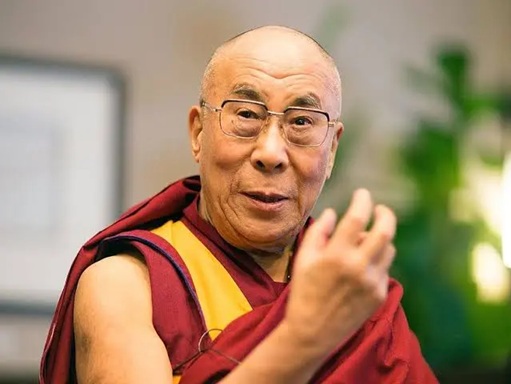
Buddhism versus Communism in deciding the Next Dalai Lama
Reincarnation is often more a romantic than a scientific concept. I’ve even written a novel with the theme of reincarnation. Nevertheless, studies at the University of Virginia found compelling anecdotal cases of children recalling past lives, suggesting potential memory transfer mechanisms that current science can’t fully explain, possibly involving quantum theories or subconscious recall, but these remain outside mainstream scientific consensus.
In popular Chinese mythology, reincarnation is often used as an exotically appealing explanation for the unlikely storyline between star-crossed lovers. It’s taken a lot more seriously in traditional Tibetan societies ruled by a Dalai Lama putatively regarded as the bodhisattva Avalokiteshvara.
Traditionally, crowns were passed from fathers to sons. When the king’s Y chromosomes can’t make it and a male heir fails to emerge, they go for nephews, half brothers or even adopted sons. Tibet is a special case, probably the only of its kind in the world.

After the collapse of the monarchy as we know it in 9th century Tibet, the former kingdom split up into several religious orders, each ruled by various theocratic “monarchies”. While monarchy, in the normal sense of the word is hereditary, theocracies are headed by celibate monks. Tibetans solved the problem with reincarnation. Religious leaders are regarded as bodhisattvas who choose reincarnation over nirvana to serve sentient beings.
The institutions of the Dalai Lama, the Panchen Lama, Khamapa and many rinpoches, are all perpetuated by the concept of reincarnation. When any one of these revered individuals dies, the search goes on to locate his reincarnation. The process tries to be scientific but in reality, it is anything but. The child who shows signs or “evidence” of remembering his past life would be put through a series of tests to prove that he is indeed the reputed lama in his previous life. To prove a child is a reincarnated lama (a tulku), senior monks conduct spiritual tests like recognising personal items (rosaries, drums, staffs) of the previous lama, recalling memories, and identifying past attendants, with the final confirmation coming from an authoritative lama after evaluating these signs, omens, and meditative insights over several years.

The current Dalai Lama, the 14th, was identified by Reting Rinpoche’s team when he was only 2 years old in 1938. Previous Dalai Lamas before him had to go through the “Golden Urn” test – which was a requirement under the Qing Dynasty of China. Candidates’ names/dates are written on slips in Manchu, Han, and Tibetan, then drawn from the urn by officials in a ceremony, with the chosen name requiring central government approval. Rinpoche did not require the boy to try his luck at the golden urn. That’s because the Qing Dynasty had collapsed by then and there was nothing Tibetan and everything colonial about that test. Guess who is thinking of reviving it.
In the intricate tapestry of Tibetan Buddhism, the Panchen Lama holds a position of profound spiritual significance, second only to the Dalai Lama. Traditionally, the Panchen Lama and Dalai Lama share a symbiotic relationship, with each playing a key role in recognizing the reincarnation of the other. This ancient tradition, rooted in centuries of Tibetan religious practice, has become a battleground for political control since China’s occupation of Tibet in 1950.
The 1995 abduction of Gedhun Choekyi Nyima, the boy recognised by the 14th Dalai Lama as the 11th Panchen Lama, exemplifies Beijing’s aggressive interference in Tibetan religious affairs. This act not only disrupted a sacred lineage but also set the stage for China’s broader strategy to dictate the succession of Tibetan spiritual leaders, culminating in recent provocative statements by Beijing’s appointed replacement that the next Dalai Lama must be selected under Chinese Communist Party (CCP) oversight. Such assertions represent a profound insult to Tibetan autonomy, cultural identity, and religious freedom, highlighting the ongoing tensions between tradition and authoritarian control.
The saga began on May 14, 1995, when the Dalai Lama, exiled in India since 1959, formally identified six-year-old Gedhun Choekyi Nyima as the reincarnation of the 10th Panchen Lama, who had died in 1989 under suspicious circumstances amid tensions with Chinese authorities. Born on April 25, 1989, in Lhari County, Tibet, Gedhun was selected through traditional Tibetan methods, including divination and recognition rituals conducted by high lamas.

However, just three days after this announcement, on 17 May 1995, Chinese authorities detained the child and his family, spiriting them away to an undisclosed location – all because their arch enemy, the Dalai Lama was involved in the recognition of the boy. An international outcry followed. The United Nations and various human rights organisations expressed concern but China ignored all of them. Gedhun has not been seen publicly since, making him one of the world’s youngest and longest-held political prisoners. This abduction was a calculated deliberate move by the CCP to undermine the Dalai Lama’s authority and assert dominance over Tibetan Buddhism and the power to manipulate traditional Tibetan practices to suit their political agendas.
In the wake of Gedhun’s disappearance, Beijing swiftly installed its own candidate, Gyaltsen Norbu (also known as Gyaincain Norbu), as the 11th Panchen Lama in November 1995. Instead of relying on tests conducted by senior monks, the Chinese government revived the Qing Dynasty Golden Urn ritual and enthroned the son of Communist party members.

Norbu, the replacement Panchen Lama resides primarily in Beijing rather than at Tashilhunpo Monastery, the traditional seat of the Panchen Lama. His public appearances are tightly controlled, often met with forced attendance and apathy from ordinary Tibetans. You’ll have to be blind or in denial not to see China’s motivation. By installing a compliant Panchen Lama, Beijing positions itself to influence the selection of the next Dalai Lama as the Panchen Lama historically plays a pivotal role in identifying the Dalai’s reincarnation.
The insult to Tibetan Buddhism was further deepened with statements from Gyaltsen Norbu asserting that the reincarnation process, including for the Dalai Lama, must adhere to Chinese laws and receive Beijing’s endorsement. In a December 2025 address, Norbu emphasised that identifying “living Buddhas” requires compliance with CCP directives and upholding party leadership, an apparent direct reference to the Dalai Lama’s succession. This echoes earlier vows during a June 2025 meeting with President Xi Jinping, where Norbu pledged to promote the “Sinicisation of religion” and support the party’s authority, framing Tibetan Buddhism as subservient to Chinese nationalism.
The Dalai Lama has repeatedly rejected this interference, stating in 2025 that his successor will be born in the “free world” outside China and that only the Gaden Phodrang Trust holds legitimate authority over the process. Norbu’s claims not only mock this stance but also perpetuate the trauma of Gedhun’s abduction, signaling Beijing’s intent to install a compliant Dalai Lama to legitimise its rule over Tibet. For Tibetans in exile and under occupation, this represents an existential threat to their faith, as it commodifies reincarnation for political gain, fostering division and eroding trust in religious institutions.
The obvious (and outrageous) contradiction here is that China had blatantly gone against the principle of the Dalai Lama endorsing the Panchen Lama Gedhun Choekyi Nyima and then got its puppet to Gyaltsen Norbu to insist that he (the fake Panchen Lama and the CCP) must endorse the Dalai Lama’s reincarnation. It may not bother some people and it’s none of my business, but I find it morally wrong and I can’t pretend not to know – unlike those who only have business concerns.
Ironically, the abduction and replacement of the Panchen Lama echoes a classical tale of evil deeds and injustice. But unlike the fictional saga of 狸猫换太子, the wronged Panchen Lama wherever he is, dead or alive, does not have Justice Bao standing up for him. In fact, any modern day Justice Bao who stands up for the Panchen Lama who was disappeared will certainly get crushed by the iron fist of a party dictatorship. Who are the heroes? Who are the villains? People are outraged by the perpetrators in 狸猫换太子. Why aren’t more people outraged by Gedhun Choekyi Nyima 换 Gyaltsen Norbu? What are Chinese values anyway?
As the Dalai Lama turned 90, the moment of “truth” is approaching. Some of us may see Beijing’s manipulation as alienating Tibetans further but will there be renewed resistance? Everybody knows that releasing Gedhun Choekyi Nyima, the real Panchen Lama is the right thing to do, but contrary to what the human rights groups may think, it won’t lead to peace and reconciliation. Instead, it will shame the CCP and open up a can of worms – something which nervous businessmen all over the world would not want to see. Justice Bao appeals to our sense of justice. In the real world, most people are cowards, hypocrites and pragmatists.
Dewdrop Books – Fiction and non-fiction with a focus on the colourful and exotic Asian realm. Check out our titles.